
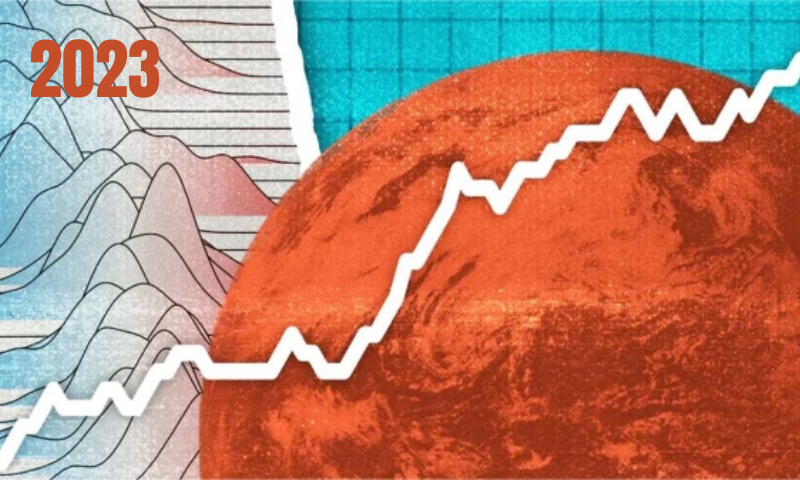



LONDON: The year 2023 has officially become the hottest on record, exceeding previous temperatures by approximately 1.48 degrees Celsius, as reported by the EU’s climate service.
The unprecedented warmth was attributed to human-induced climate change and the influence of the El Niño weather phenomenon, contributing to consistently elevated global air and sea surface temperatures.
From July onwards, nearly every day set a new global air temperature record, leading to an extraordinary and prolonged period of warmth. The United Kingdom also witnessed its second warmest year on record. The significance of the records broken in 2023, with substantial margins, has raised concerns among scientists, prompting questions about the Earth’s climate’s unpredictable behavior.
The impact of this record warmth extended globally, intensifying extreme weather events such as heatwaves, wildfires, droughts, and floods on a larger scale and at unusual times, resulting in widespread destruction.
The effects were not confined to air temperature alone, with Antarctic sea ice reaching alarming lows, Arctic sea ice remaining below average, and glaciers in North America and the European Alps experiencing extreme melting.
The year 2024 brings the potential to surpass the records set in 2023, with uncertainties tied to the unusual behavior of the current El Niño. This unpredictability raises concerns about the possibility of surpassing the crucial 1.5-degree Celsius warming threshold established by nearly 200 countries in the 2015 Paris Agreement.
Although a single-year breach wouldn’t violate the agreement, it underscores the alarming trajectory toward exceeding long-term global warming targets.
As the world grapples with the consequences of rising temperatures, the recent COP28 climate summit emphasized the urgent need to address fossil fuel emissions, acknowledging them as the primary driver of global warming. While the climate deal fell short of mandatory commitments, there is optimism that progress in renewable energy and electric vehicles can contribute to mitigating the impacts of climate change, highlighting the significance of every fraction of a degree in temperature control.