


KEY POINTS
- Katcha region serves as a sanctuary for heavily armed gangs.
- Criminals exploit sugarcane fields and river networks for escape.
- Drones deployed, police escort passenger vehicles on CPEC route.
- Land disputes and criminal control exacerbate lawlessness in Katcha areas.
RAJANPUR, Pakistan: One winter night in Sadiqabad — 605 kilometres southeast of Lahore, the provincial capital of Punjab — a factory worker Muhammad Shahid stepped off a bus and disappeared — not into darkness, but into a wooden box.
Four armed masked men surrounded him on December 5 last year after he stepped off the bus. They robbed him, beat him, and shoved him into a large wooden box placed inside a rickshaw.
The box was covered with sugarcane residue and kitchen utensils — a disguise meant to pass unnoticed through city streets. “When they opened the box again, I was in Katcha,” Shahid recalls.
After hours confined in the box, he was marched through a dense jungle, ferried across the river by boat to what locals call ‘Karachi Katcha’ — a notoriously inaccessible stretch of riverine forest near Rajanpur’s embankments, where heavily armed gangs maintain hideouts.
For the next 25 days, Shahid says, he was chained inside a cave during freezing December nights, surrounded by nearly 20 armed men. “I prepared myself mentally for torture and death,” he says.
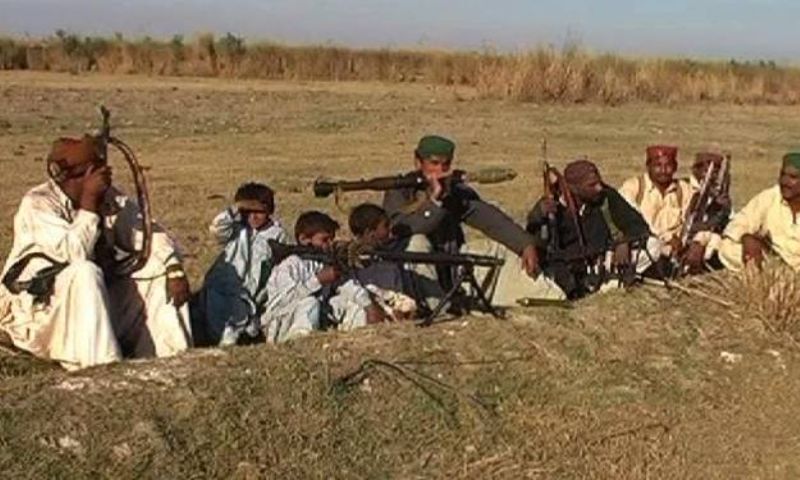
The Katcha region — a maze of river islands and floodplains along the Indus River between Rahim Yar Khan and Rajanpur — has long served as a sanctuary for armed gangs operating beyond the easy reach of law-enforcement agencies. Once inside the region, Shahid says, escape becomes unthinkable.
Once they decide who can arrange money, they stop asking questions and start threatening.” – Muhammad Shahid, a survivor of abduction
The kidnappers — men with long hair, Sindhi ajraks (a traditional Sindhi shawl) draped over their shoulders, speaking Saraiki and Sindhi — interrogated Shahid relentlessly about his family, income sources, and who held authority in his household.
Shahid says this assessment determines whom the gang contacts for ransom. “Once they decide who can arrange money, they stop asking questions and start threatening.”
Ransom, rescue — and a troubling claim
According to Shahid, his captors initially demanded Rs 5 million (around $18,000). Days later, his brother-in-law, Tanveer Ahmed, received a call from a notorious gang leader, Tanveer Andhar, threatening to kill Shahid if the money was not paid.
Ahmed says he informed Bhong Police Station’s Station House Officer (SHO), Rana Ramzan, who advised him not to pay immediately and instead “engage” the gang in dialogue.
But as threats intensified — “pay within two days or your man will be killed” — the family borrowed money from relatives and managed to collect Rs 1 million (around $3,600).
Ahmed alleges that the SHO instructed him to bring the money to Bhong, where a private individual connected to the police collected it. That night, Shahid was released.
Police later told the family he had been “rescued during an operation” and asked them to come to the station with sweets and flower garlands. A celebratory photo session followed, praising officers for a “successful rescue.”

Shahid disputes this account. “I was released only after the ransom was paid. There was no operation,” he says.
On the other hand, SHO Rana Ramzan denies any involvement in ransom collection. He tells WE News English that the family dealt with a private individual without police knowledge.
He acknowledges that ransom was paid but rejected allegations of collusion. Questioned about taking credit for Shahid’s release, he ended the call.
Rising urban kidnappings
Shahid’s ordeal is not an isolated incident.
Communities across Rahim Yar Khan and Rajanpur say kidnappings for ransom have increased sharply, not only in the Katcha belt but also in urban areas once considered safe.
Once they cross into Katcha, the chances of recovery without payment become very slim.” – Azizullah Khan, a local advocate
In September alone, more than 11 people were abducted from the Motorway within Sadiqabad’s jurisdiction, prompting police to escort passenger vehicles at night.
Asif Mahmood, a 40-year-old resident of Sadiqabad who was released two months ago, says fear lingers long after captivity ends. “Once someone is abducted, it becomes easier to abduct him again,” he says. “These areas are no longer safe.”
Legal experts and former police officers say the spread of kidnappings into cities reflects a dangerous shift.
Azizullah Khan, a local lawyer who has also served the police as an officer, says criminal groups operating in urban areas have formed alliances with Katcha gangs, making abductions easier to execute and harder to trace.
Dense sugarcane fields, especially during harvest season, provide ready escape routes.
“Once they cross into Katcha, the chances of recovery without payment become very slim,” he says.
Beyond the riverbanks
The Katcha region — spread across the Indus floodplain between Punjab, Sindh, and Balochistan — comprises shifting riverbeds, forests, and more than 60 permanent and seasonal islands.
Stretching roughly 20 to 25 kilometres in width and nearly 50 kilometres in length, the belt remains difficult to access, police say.
The Indus River splits Rajanpur’s Katcha into two parts: one closer to Rajanpur city, the other bordering Rahim Yar Khan, allowing criminals to move between districts with ease.
Gangs entrenched in these areas include the Lund, Umrani, Dashti, Bannu, Lathani, Sakhani, Kosh, Salara, Dolani, and Indhar groups.
Law-enforcement officials allege that some of these networks receive logistical or tribal support — a claim denied by tribal chiefs.
What is no longer disputed is the gangs’ expanding reach.
According to police and residents, kidnappings that once relied largely on so-called honey-trap schemes have increasingly shifted to physical abductions from cities and highways.
Legal experts say greater public awareness reduced honey traps, pushing criminals towards more violent methods.
Underreporting and fear
Rahim Yar Khan District Police Officer (DPO) Irfan Ali Samoo confirms that kidnapping cases have increased this year, saying police recovered all 15 abductees reported in 2025, compared to five last year. Rajanpur Police say 42 kidnappings have been reported since 2023.
White-collar families and legitimate landowners are fleeing. Criminal groups have created de facto no-go zones.” – A security official
According to Punjab Police social-media reports, at least 10 operations conducted between October 18 and early November resulted in the recovery of nearly 15 hostages from Katcha areas.
DPO Samoo says police have killed 42 bandits, injured 86, and arrested 91 during intelligence-based operations in 2025. Twenty suspects have reportedly surrendered.
He adds that police now escort passenger vehicles along the China–Pakistan Economic Corridor (CPEC) route linking Punjab and Sindh, particularly during night hours.
Police have also been equipped with drones — 12 in Rahim Yar Khan and eight in Rajanpur — some for surveillance, others capable of targeted strikes.
Yet victims like Shahid say such claims do not reflect their reality. “I was not rescued,” he says. “I was released after money was paid.”
Former Sadiqabad Bar Association president Khalid Bin Saeed says many families never register First Information Reports (FIRs), fearing retaliation or being discouraged by police.
“People quietly pay ransom to save lives,” he says. “Without strict punishment for police–criminal links, nothing will change.”
Accountability and arrests
Authorities say internal accountability mechanisms are underway.
DPO Samoo says 13 police officers — including two sub-inspectors and two assistant sub-inspectors — have been suspended for alleged links with drug dealers, gamblers, and criminals.
Former SHO Rana Ramzan is also facing an FIR in a separate case, accused of taking Rs 900,000 from an Afghan national and releasing him. Police say he has been arrested and the trial is ongoing.
In April 2025, Rajanpur Police also arrested Border Military Police personnel allegedly transporting weapons to Katcha gangs.
FIR records show the recovery of G-3 ammunition, a locally made Kalashnikov, and several hundred rounds from their vehicle. The suspects were later released on bail.
Land, power, and lawlessness
A senior security official, speaking on condition of anonymity, links the persistent lawlessness in Katcha areas to disputes over land ownership and control of fertile riverine tracts.
He says traditional land identification markers for property boundaries — known locally as Marhabas or Burjs, some dating back to the Mughal era — have been systematically removed or altered by armed groups.
This has made it nearly impossible for rightful owners to prove claims.
Revenue officials, he says, often avoid visits due to security threats, leaving disputes unresolved and enabling land encroachment by criminal syndicates. “White-collar families and legitimate landowners are fleeing. Criminal groups have created de facto no-go zones.”
Even influential tribal landlords, a close aide to a prominent chief confides, are forced to pay protection money — as much as Rs 10,000 per acre — or risk losing crops or facing abductions.
Rajanpur Police deny knowledge of such arrangements and urge landowners to report incidents.
Unanswered questions
WE News English repeatedly sought comment from Punjab Law Minister Rana Iqbal Khan regarding the government’s strategy for restoring state writ in Katcha Rahim Yar Khan and Rajanpur. Despite being informed of the queries, he declined to respond.
As kidnapping cases multiply and allegations of police–criminal collusion deepen, families like Shahid’s remain trapped between fear and silence.
“They call it a rescue. For us, it was only survival,” says Shahid.