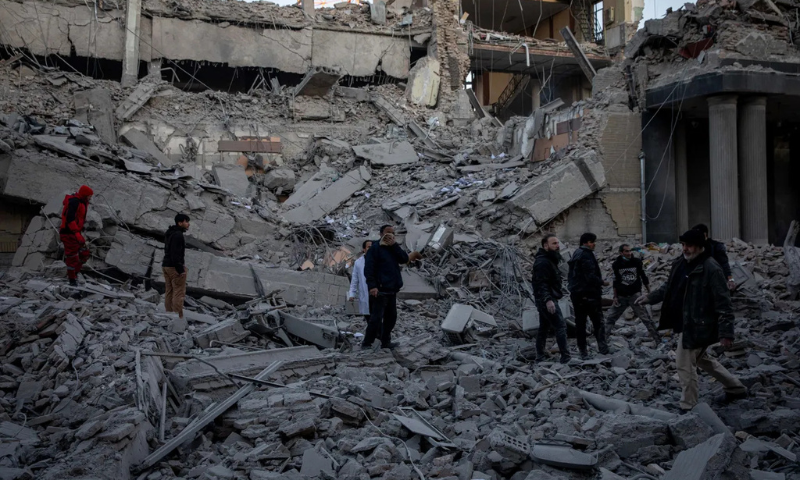



TEHRAN: Around 100,000 people fled Iran’s capital in the first two days of US and Israeli strikes, the United Nations said, as the conflict triggered by the attacks continued to widen across the Middle East.
The UN refugee agency said the departures took place during the initial phase of the offensive launched on February 28.
“In Iran, an estimated 100,000 people left Tehran in the first two days following the attacks,” the UNHCR said in a situation report released Wednesday.
Despite the exodus from the capital, the agency said there had been no immediate surge in people crossing international borders.
“Latest reports indicate no increase in cross-border movements linked to recent events. The situation at the Islam Qala border crossing with Afghanistan remains stable with no significant changes observed,” the report said.
The war erupted after a large-scale US-Israeli assault that Iranian authorities say killed Supreme Leader Ayatollah Ali Khamenei.
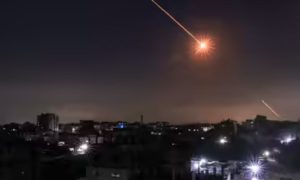
Since then, Iran has launched waves of missile and drone strikes targeting Israel and US military facilities across the Gulf.
Regional conflict expands
The fighting has quickly spread beyond Iran’s borders, with hostilities reported in Lebanon, Syria, Iraq, Israel, and across the Gulf countries.
Hundreds of people have reportedly been killed in the escalating conflict, including six US service members.
Critics say the Trump administration has offered shifting explanations for the attacks.
At times, officials have described the operation as a preemptive effort aimed at weakening Iran’s military and nuclear capabilities.
In other instances, the strikes have been framed as necessary to protect American interests following Israel’s own offensive against Iran.
US Secretary of State Marco Rubio offered another justification, saying Washington believed Iran would retaliate against the United States if Israel launched attacks alone.
“It was abundantly clear that if Iran came under attack by anyone – the United States or Israel, or anyone – they were going to respond, and respond against the United States,” Rubio told reporters on Capitol Hill.
Legal and political criticism
Legal experts have also questioned the basis for the military campaign.
Wells Dixon, a senior attorney at the Center for Constitutional Rights, said the administration’s explanation appeared to reflect strategic objectives rather than legal justification.
“Those are military policy objectives,” Dixon said. “They are not a legal basis to launch an armed attack against another country.”
Senator Tim Kaine said he supported previous US efforts to defend Israel during earlier Iranian attacks but warned that the current situation was different.
“That’s a very different matter than the US engaging in the affirmative initiation of war,” he said.