


KEY POINTS
- KP doctors exploited Sehat Sahulat Programme for personal financial gain.
- Patients often charged cash while Health Card claims filed simultaneously.
- Morning surgeries falsely recorded as evening procedures for direct profit.
- 24–30 consultants implicated out of 108 under IBP system.
- Total fraudulent surgeries reached 3,921, with Rs500 million losses.
- Medicines worth Rs10.4 million issued under suspicious morning-to-evening claims.
- Revenue-sharing formula manipulated to increase doctors’ financial allocations.
- IBP generated Rs592 million revenue, hospital covered Rs65.4 million gap.
- NAB and Anti-Corruption Establishment initiated formal investigations.
- Hospital audit reveals annual losses of Rs50–60 million persistently.
PESHAWAR, Pakistan: The Khyber Pakhtunkhwa government introduced the Sehat Sahulat Programme with the stated aim of providing financial protection to citizens seeking medical treatment.
However, official records and internal audits reveal that the system has been systematically exploited by a group of doctors at a tertiary care hospital in the provincial metropolis, turning a public welfare initiative into a source of personal profit.
The anomalies were executed through complex technical methods that were not difficult — but not impossible — to detect them within the computerised hospital system.
According to the hospital records, doctors frequently prescribed Health Card-holding patients excessive medicines, which were later resold to other patients for hard cash.
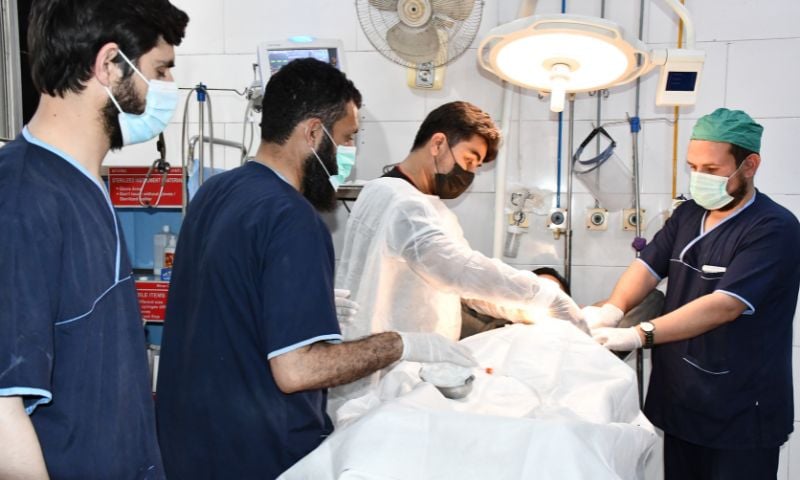
In hundreds of cases, patients were charged cash for surgeries, while the same procedures were simultaneously claimed through the Health Card — effectively allowing doctors to receive double payments.
Under government policy, surgeries conducted in the morning under the Health Card are treated as hospital procedures, with the full payment going to the hospital.
Evening procedures fall under Institutional Based Practice (IBP), where revenue is shared between doctors and the hospital according to a defined formula.
Investigations show that doctors performed surgeries during morning hours but falsely recorded them as evening procedures to dip their hands directly into the revenue stream.
For the first time, both the National Accountability Bureau (NAB), Khyber Pakhtunkhwa and the Anti-Corruption Establishment Khyber Pakhtunkhwa, have initiated inquiries into these reported irregularities.
Hospital logs reviewed by this correspondent indicate financial irregularities exceeding Rs500 million so far, pointing to systemic abuse rather than isolated lapses.
Programme expands rapidly
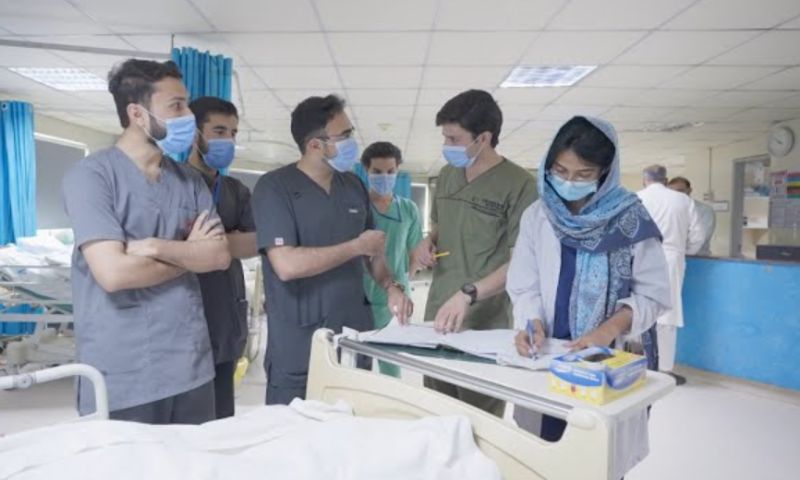
The Khyber Pakhtunkhwa government launched the Sehat Sahulat Programme in December 2015 in four districts — Mardan, Malakand, Chitral, and Kohat — registering 100,000 families in the pilot phase.
Each individual was entitled to treatment worth Rs30,000, with a total family ceiling of Rs210,000. The government allocated Rs165 million annually for this initial rollout.
Currently, 155 hospitals are empanelled across the province, including 61 government hospitals, and treatment for more than 2,000 diseases — along with three types of transplants in special cases — is covered under the scheme.” – Dr Riaz Tanoli, Project Director Sehat Sahulat Programme
In August 2016, the programme was expanded to cover 50 per cent of the province’s population, registering 2.3 million families with a treatment ceiling of Rs40,000 per individual, supported by an annual allocation of Rs2.4 billion.
In November 2017, coverage was further widened to 64 per cent of the population, with three million families registered and an annual allocation of Rs4.5 billion.
By November 2020, the programme was extended to cover 100 per cent of the population, registering 5.4 million families with a ceiling of Rs1 million per family and an annual allocation of Rs18 billion—marking a quantum leap in scale and spending.
Dr Riaz Tanoli — Project Director of the Sehat Sahulat Programme — confirms that the number of registered families has since increased to 10.8 million, with the government allocations now ranging between Rs32 and Rs33 billion annually.
Dr Tanoli tells WE News English that while corruption cannot be eliminated entirely, it can be minimised through monitoring mechanisms. He adds that six different types of complaints can be registered under the programme.
“Currently, 155 hospitals are empanelled across the province, including 61 government hospitals, and treatment for more than 2,000 diseases — along with three types of transplants in special cases — is covered under the scheme.”
Profit tilts doctors’ way
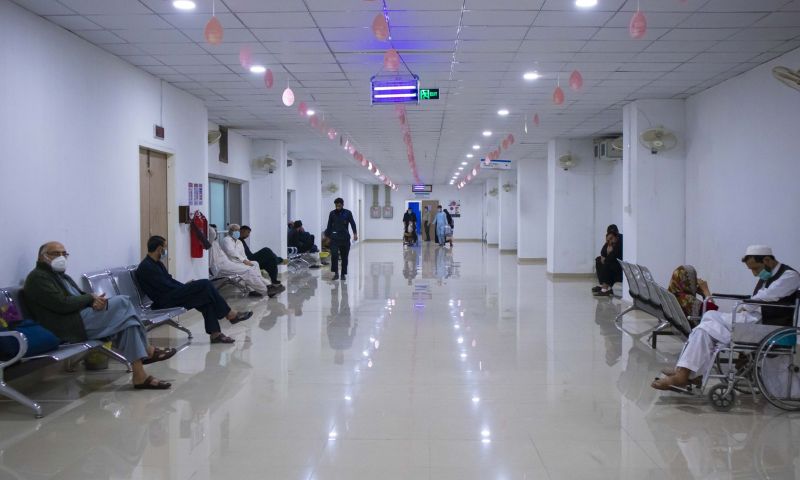
In January 2020, the Khyber Pakhtunkhwa Health Department issued a revenue-sharing formula for hospitals treating patients under the Health Card.
Under the original formula, hospitals received 45 per cent, doctors 30 per cent, nursing and paramedical staff 15 per cent, and administration 10 per cent.
Nevertheless, hospital management and boards later trimmed the hospital’s share to fatten doctors’ allocations.
The original formula, issued on January 01, 2020, was revised on April 28, 2022, following sustained pressure from doctors represented on hospital boards.
Although the revised formula was approved for only six months, it continues to be implemented — long after its expiry date.
Surgeries performed in the morning but recorded as evening procedures alone generated Rs16.35 million.” – A consultant at the Khyber Teaching Hospital
Under the revised arrangement, 45 per cent of the share was allocated to doctors, 15 per cent to anaesthesia, 32 per cent to hospitals, five per cent to technicians, and three per cent to administration.
Documents show that this adjustment caused losses amounting to millions of rupees to Khyber Teaching Hospital, weakening its financial backbone.
Doctors’ dubious gains
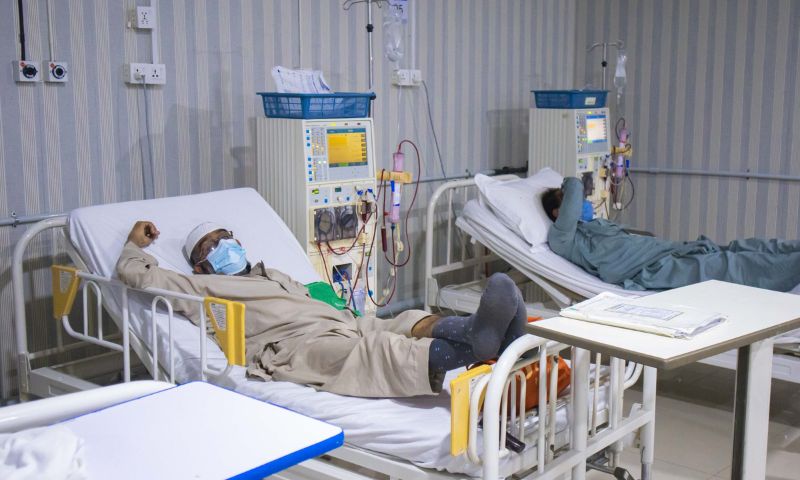
According to official documents, the Khyber Teaching Hospital, Peshawar, received Rs2.15 billion through Health Card treatments between 2020 and 2025.
Out of 108 consultants practicing under IBP, between 24 and 30 surgical and allied consultants purportedly turned the Health Card into a personal income source.
A total of 3,921 surgeries were performed, including 178 Health Card surgeries in which cash was also collected from patients.
These cases were shown as evening (IBP) procedures despite there being no IBP registration for the patients—raising red flags in the official records.
Additionally, 3,413 surgeries were performed in the morning under the Health Card, for which the full payment should have gone to the hospital.
However, these surgeries were recorded as evening procedures so that doctors could receive a 45 per cent share.
Additionally, 330 patients underwent Health Card surgeries in the morning while also being charged cash—effectively paying twice for the same procedure.
Operation theatre pharmacy issuance records and surgery logs reveal medicines worth Rs10.4 million were issued for patients whose surgeries were conducted in the morning but were recorded as evening procedures.
The discrepancy is evident from comparisons of Operation Theatres schedules, patient case files, and pharmacy dispensing timestamps maintained by Khyber Teaching Hospital.
Investigations indicate that these surgical consultants caused losses exceeding Rs500 million to the hospital through 3,921 surgeries — painting a picture of organised abuse rather than sporadic misconduct.
Double-dip earning
A consultant at the General Surgery Department of KTH tells WE News English, on condition of anonymity, that these doctors collected Rs3.53 million in cash from patients and also claimed payments through the Health Card.
“Surgeries performed in the morning but recorded as evening procedures alone generated Rs16.35 million,” the consultant says.
Documents reveal that Associate Hospital Director of General Surgery Dr Nisar Ahmed collected Rs5.46 million in cash and Rs18.06 million through the Health Card.
In Paeds Urology, Dr Tariq Ahmed earned Rs7.46 million in cash and Rs12.25 million via the Health Card.
Neurosurgeon Dr Muhammad Idrees Khan generated Rs26.78 million in cash and Rs13.32 million through the Health Card.
Associate Hospital Director of Neurosurgery Dr Sajjadullah obtained Rs1.4 million in cash and Rs4.04 million through the Health Card.
The committee is examining all aspects of the matter, and that the review process will take three months, of which two months have already passed.” – Dr Wajid Ali, Chairman Hospital’s Board of Governors
In the Surgical Department, Dr Muhammad Younis Khan pocketed Rs1.99 million in cash and Rs13.7 million through the Health Card, while Dr Munir Ahmed secured Rs0.27 million in cash and Rs4.84 million through the Health Card.
A paediatric surgeon raked in Rs4.78 million in cash and Rs 6.36 million via the Health Card.
Other doctors named in the documents include Dr Hizbullah Jan, Dr Imran Khan, Dr Muhammad Uzair, Dr Naeem Khattak, ENT’s Dr Muhammad Imran, Urology’s Dr Hazratullah, ENT’s Dr Aftab Ahmed Khan, Dr Uzair, Syed Asad Maroof, Dr Bilal, and others.
Cash off the books
Hospital sources say that while the system is computerised on paper, operation theatre charts are manually prepared by doctors and later used to record surgeries — creating loopholes large enough to drive a truck through.
This has raised serious concerns about the hospital’s finance department, as the practice continued for years — either due to deliberate silence, tacit support, or sheer failure to connect the dots.
Sources add that this aspect is also under investigation, as the number of registered surgeries is lower than the operation theatre lists, indicating that many procedures were conducted for cash and kept off the book.
The provincial government introduced Institutional Based Practice to strengthen hospitals and discourage the private practice during evening hours by the doctors serving in the government-run hospitals.
Under IBP, assistant professors receive Rs100,000 per month, associate professors Rs125,000, and professors Rs150,000 as incentives, while hospitals provide operation theatres, clinics, and other facilities — often at their own expenses. This practice has recently been discontinued.
Documents show that during fiscal year 2023–24, IBP generated Rs592 million in revenue.
Of this, Rs431.8 million was paid to doctors, radiology, and laboratory shares; Rs27.9 million to technicians and support staff; Rs52.8 million deducted as tax; Rs 39.9 million spent on other expenses; and Rs 105 million paid as incentives to doctors — bringing the total expenditure to Rs 657.4 million.
As a result, the hospital had to plug a Rs 65.4 million gap from its own funds.
NAB, ACE step into fray
The Chairman of the Hospital Board of Governors, Colonel (Retd) Dr Wajid Ali, states that a committee has been constituted to audit the Sehat Card programme and review institutional practices.
“The committee is examining all aspects of the matter, and that the review process will take three months, of which two months have already passed.”
However, his claim appears inaccurate, as the audit has already been completed, a copy of which is in the possession of WE News English.
Regarding NAB’s involvement, he claims no inquiry has been initiated by it. Nevertheless, official documents contradict his assertion.
Both the National Accountability Bureau and the Anti-Corruption Establishment have launched investigations and formally requested the relevant records.
The hospital’s internal audit report, available with WE News English, states that due to flawed institutional practices, the hospital suffers an annual financial loss of approximately Rs50 to Rs60 million — year after year.